

A PFA lined butterfly valve is a quarter-turn valve whose body and disc are lined with perfluoroalkoxy (PFA), so the process fluid never touches the metal underneath. It combines the compact, lightweight design of a butterfly valve with the near-universal chemical resistance of a fluoropolymer. That combination is why PFA lined butterfly valves are a standard choice for acids, alkalis and solvents in chemical plants.
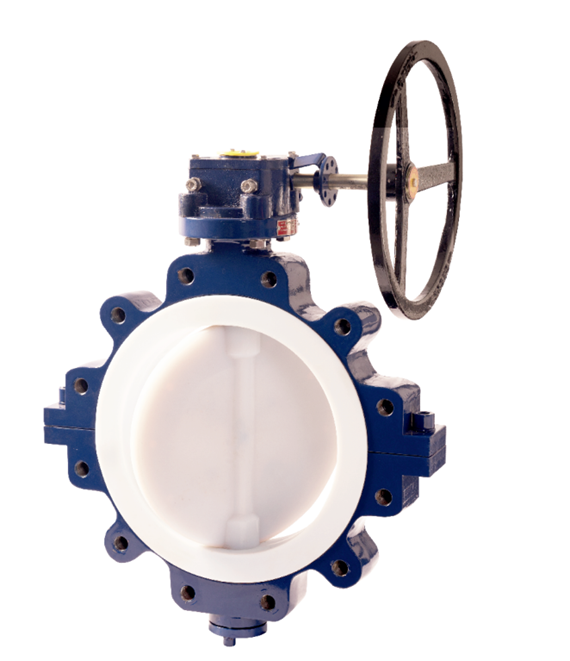
How a PFA Lined Butterfly Valve Is Built
Every lined butterfly valve has the same basic job split: the metal parts carry the pressure and the mechanical loads, and the lining keeps the chemistry away from them.
- Body: carbon steel (ASTM A216 WCB) or stainless steel (CF8, CF8M or SS304) provides strength. Its wetted surfaces are fully lined.
- Disc: a metal core fully encapsulated in PFA. In GreyTec’s design the stem and disc are a single piece, which prevents the two from twisting out of alignment over time.
- Trim insert: a duplex steel, super duplex or Alloy 20 insert gives the stem high torsional strength, so the disc closes fully instead of flexing under torque.
- Seat: a modified PTFE (mPTFE or TFM) seat with an elastomer backing. It seals against the disc and also seals against the pipe flanges.
- Top works: an ISO mounting pad lets you fit a lever, gearbox, electric or pneumatic actuator directly.
How It Works
The disc sits in the middle of the flow path and rotates 90 degrees on its stem. Fully open, the disc lies parallel to the flow. Fully closed, it presses into the seat and stops the flow. Because only a quarter turn is needed, butterfly valves operate quickly, need little space and are easy to automate.
Lined butterfly valves are tested for tight shutoff according to API 598, the standard for valve inspection and testing. GreyTec specifies its valves as Class VI tight shutoff, meaning no visible leakage past the closed disc during the seat test.
Why PFA as the Lining Material
- Chemical resistance: PFA is fully fluorinated and resists almost all acids, bases and organic solvents across a wide temperature range.
- Low permeation: PFA is melt-processed into a dense, continuous lining. That makes it less permeable than standard PTFE, which matters with aggressive media such as hydrochloric acid and chlorine. The difference is explained in PTFE vs PFA lined butterfly valves: key differences.
- Smooth, non-stick surface: deposits struggle to build up, which reduces fouling and makes cleaning easier.
- High purity: virgin, high-purity PFA does not leach contaminants, so it suits pharmaceutical and other high-purity processes.
- Antistatic option: antistatic PFA grades dissipate static charge for flammable or non-conductive media.
When to Use a PFA Lined Butterfly Valve
A PFA lined butterfly valve is a good fit when corrosive media meets a medium or large line size and a moderate pressure class. Typical applications include:
- Hydrochloric acid, sulfuric acid and caustic soda in chlor-alkali and chemical processing plants
- Acid and solvent lines in petrochemical and pharmaceutical production
- Leaching and acid handling in mining and steel pickling
- Bleaching chemicals in pulp and paper mills
- Dosing and chemical handling in wastewater treatment
For on/off and moderate throttling duty from DN50 upward, a lined butterfly valve is usually lighter and less expensive than a lined ball or plug valve of the same size.
When to Consider Something Else
- Heavy abrasive slurries: solids can erode the lining and the seat. Ask about the slurry content before choosing.
- Pressure above the valve’s class: GreyTec’s lined butterfly valves are rated ANSI B16.5 Class 150 / DIN PN10.
- Temperatures outside the rated range: the valve rating, not the polymer, sets the limit. Always check the datasheet.
- Full-bore or tight throttling duty: a lined ball valve or lined plug valve may suit better.
Typical Specification at a Glance
- Sizes: DN50 to DN1000 (2″ to 40″)
- Design: API 609 Category A, wafer or lug type
- Rating: ANSI B16.5 Class 150 / DIN PN10
- Disc lining options: PFA, FEP, PVDF, ETFE, ECTFE, PPH, antistatic PFA
- Seat: mPTFE, TFM or PTFE with elastomer backing
- Testing: API 598, ISO 9393-2 or BS EN 12266-1 (hydro, pneumatic and spark test)
- Certification: CE / PED, ISO 15848-1 fugitive emissions
Choosing the Right Variant
Once you know a lined butterfly valve suits your duty, the next decisions are the lining material, the body type and the actuation. Our lined butterfly valve buyer’s guide walks through each one. If you are deciding between linings, start with PFA vs PTFE lined butterfly valves: which one fits your process. When the valve arrives, follow our step-by-step lined butterfly valve installation guide to protect the lining. For body type, see the difference between wafer and lug butterfly valves.
Frequently Asked Questions
What is the difference between a lined and an unlined butterfly valve?
In an unlined valve the process fluid touches the metal body and disc, so the metal itself must resist corrosion. In a lined valve a fluoropolymer layer separates the fluid from the metal, so a carbon or stainless steel body can safely handle aggressive chemicals.
Can a PFA lined butterfly valve be used for throttling?
Yes, for moderate throttling. Avoid running for long periods at very small openings with a high pressure drop, because the fast flow at the disc edge can wear the seat and the lining.
What sizes are PFA lined butterfly valves available in?
GreyTec supplies PFA lined butterfly valves from DN50 to DN1000 (2″ to 40″) in wafer and lug designs.
See full specifications, linings and actuation options on our PFA lined butterfly valve product page.